Iraqi Kurdistan Is the Last Autonomy Standing and the Most Vulnerable
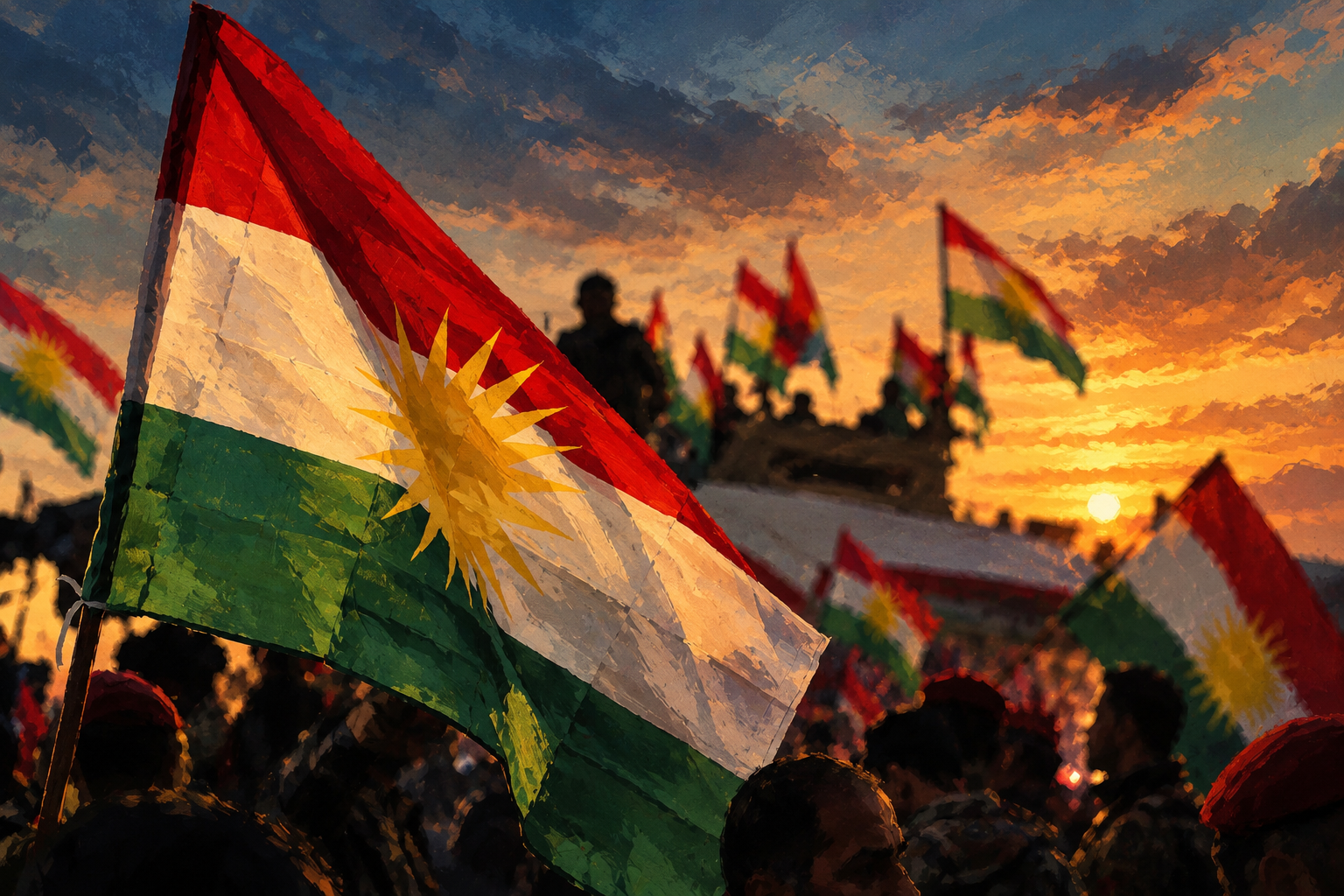
The dismantling of Kurdish military autonomy in August 2026 changed the geopolitical landscape of Syria and the broader Levant and Upper Mesopotamia. On 25 August 2026, the Syrian Democratic Forces (SDF) was formally dissolved and integrated into the Syrian army, leading to the conclusion of a 17-month integration process led by Syria’s transitional president, Ahmed al-Sharaa, after the fall of the Assad regime. Meanwhile, Turkey’s parliament passed the law on Bill of Strengthening National Solidarity and Social Integration in August 2026, establishing a legal framework for the ongoing peace process and the disarmament of the Kurdistan Workers’ Party (PKK). The changes leave the Kurdistan Region of Iraq (KRG) as the final standing institutionalized Kurdish self-rule in the Middle East. The central question, after the collapse of Kurdish military exceptionalism in Syria and the transition of PKK out of armed struggle, is no longer about resistance, but survival: What is left for the KRG? These changes might have provided Erbil a break from decades of border conflict; at the same time, they have also opened a new era of serious geopolitical vulnerabilities for it.
The disarmament of the PKK, which has long been an internal nuisance for Turkey, saw Turkish military strikes in the Iraqi Kurdistan region drop by 97% after the July 2025 weapons-burning ceremony in Sulaymaniyah, Iraq. This has given border communities in Duhok and Erbil with a rare sense of stability.
However, the withdrawal of the American military umbrella could undermine this newfound stability. According to reporting by Al Majalla, American C-17 Globemaster III military transport aircraft transferred Patriot surface-to-air missile batteries from the U.S. military base adjoining Erbil International Airport to American bases in Jordan, while an aerial surveillance balloon over Erbil was also removed. Political science professor Nawal Ramo, in an interview with Al Majalla, argued that the accelerated drawdown was partly driven by pressure on U.S. defensive munitions, particularly Patriot interceptors, and reflected Washington’s broader strategy of repositioning its forces to confront Iran. These developments could increase Erbil’s vulnerability to Iranian missile and drone attacks, even as declining Turkish military operations have eased security pressures along its northern frontier.
The disarmament of PKK has led to the creation of a power vacuum in Sinjar and the Qandil mountains. While it is an opportunity for the KRG to regain sovereign control of territory held by militants for years, it needs a military presence that the Peshmerga might not be able to maintain without coalition support. The removal of Patriot batteries has reduced Erbil’s protection against sophisticated aerial threats, raising concerns about its vulnerability to missile and drone attacks. As Professor Ramo warns that the removal of American bases will not deter Iran or its proxies in Iraq. Iran, instead, sees the KRG as a “shield less” target. According to the Kurdistan Regional Government’s Ministry of Peshmerga Affairs, more than 1,000 drones and ballistic missiles struck the Kurdistan Region during the regional conflict in 2026, underscoring the security risks associated with the withdrawal of American air-defense systems.
There are also worries of Iran adding to these tensions. Ghaleb al-Daami, an Iraqi political analyst, points out that the PKK’s presence provided Tehran with a “strategic asset” to pressure Ankara. The PKK’s disarmament could deprive Tehran of an important source of leverage against Turkey. That could leave Erbil caught between an increasingly empowered Ankara and a Tehran potentially seeking new ways to exert influence, without the same level of American protection it previously enjoyed.
The same security gap in Baghdad weakens Erbil’s hand. The dissolution of the PKK has upended the balance of power between the federal government in Baghdad, the KDP (Kurdistan Democratic Party) and the PUK (Patriotic Union of Kurdistan). The PKK, historically, has been used as a complex bargaining chip by the KRG, but now its disarmament forces the KRG to face the reality on the ground. The KRG Representative to the United States, Treefa Aziz, has emphasized Erbil’s supported dialogue as the “only viable path to long term stability”, but the price of this is the loss of their leverage.
Iraqi Kurds never really controlled these levers. Yasin Aziz, a Kurdish political analyst, in an interview with Al-Estiklal, stated that the PKK was never an Iraqi entity and its leadership was primarily non-Iraqi.
The consequences are also visible in a constitutional dispute over military bases and security responsibilities. Erbil claims the right to govern its internal security under Article 121 of the Iraqi Constitution, which defines the powers of Iraq’s regional governments. However, Article 110 reserves national security policy and the management of Iraq’s armed forces to the federal government. With the withdrawal of US forces, Baghdad could seek greater control over military facilities and air-defense arrangements, potentially increasing pressure on the KRG’s autonomy. These competing constitutional responsibilities could intensify tensions between Baghdad and Erbil. The KRG remains increasingly exposed to Baghdad’s centralizing policies concerning oil revenues and disputed territories, particularly as the American military presence diminishes and the PKK’s disarmament changes Turkey’s security calculations.
Erbil’s third loss is economic. The KRG’s status as a regional transit hub is threatened by the restoration of Syrian state authority under Ahmed al-Sharaa. KRG might potentially be rendered a geopolitical backwater by the al-Sharaa administration, as an Islamist-leaning ally of Turkey, offering Ankara a more direct and ideologically aligned route to the wider Middle East.
The normalization of trade between Turkey and Syria via former SDF-controlled areas bypasses the Iraqi Kurdistan region. If Damascus provides Ankara with a stable pathway to the Gulf, the KRG’s economic relevance to Ankara, one of its only remaining leverage points, will disappear.
The security vacuum further complicates this problem. Professor Ramo also warns of a “perceived lack of protection,” which might lead international energy companies to withdraw from the KRG.
The KRG’s primary source of revenue could collapse before it can diversify if regional actors continue to target its oil infrastructure, forcing out foreign investment.
Erbil cannot look to Syria for energy partnership, as prospects of any cross-border Kurdish resource cooperation were also shattered with the dissolution of the SDF, as this means that the central government in Damascus has control over northern Syrian oil and gas and is consolidating energy power in a way that disadvantages Erbil’s ambition of independent energy.
Iraqi Kurdistan remains the last standing project of Kurdish autonomy, but it is an autonomy under threat. While the historic PKK-Turkey border tensions have subsided, making the region safer, its political and economic leverage is dwindling at an alarming rate; the “American umbrella” is folding and the SDF buffer zone in Syria has been reabsorbed by a new Syrian state that is aligned with Turkey.
The “breathing space” Erbil enjoys is a finite resource. Its survival now depends on using this time to achieve what it has long overlooked: a genuine internal consolidation. The KRG must now move beyond its rivalry with the PUK to present a unified voice and front to Baghdad, especially in the dispute over bases, where a divided Kurdish leadership weakens Erbil’s Article 121 claim. Even its Prime Minister, Masrour Barzani, has emphasized stability through a peaceful solution, but that peace must be secured through diplomatic means and partnership based on infrastructure in a Middle East without a military buffer. Erbil must move towards becoming an indispensable economic and cultural partner to its neighbors, to replace the vanishing security shield. It can no longer rely on an external protector that is no longer willing to foot the bill.