Growing Role of Attrition in Wars and the South Asian Case
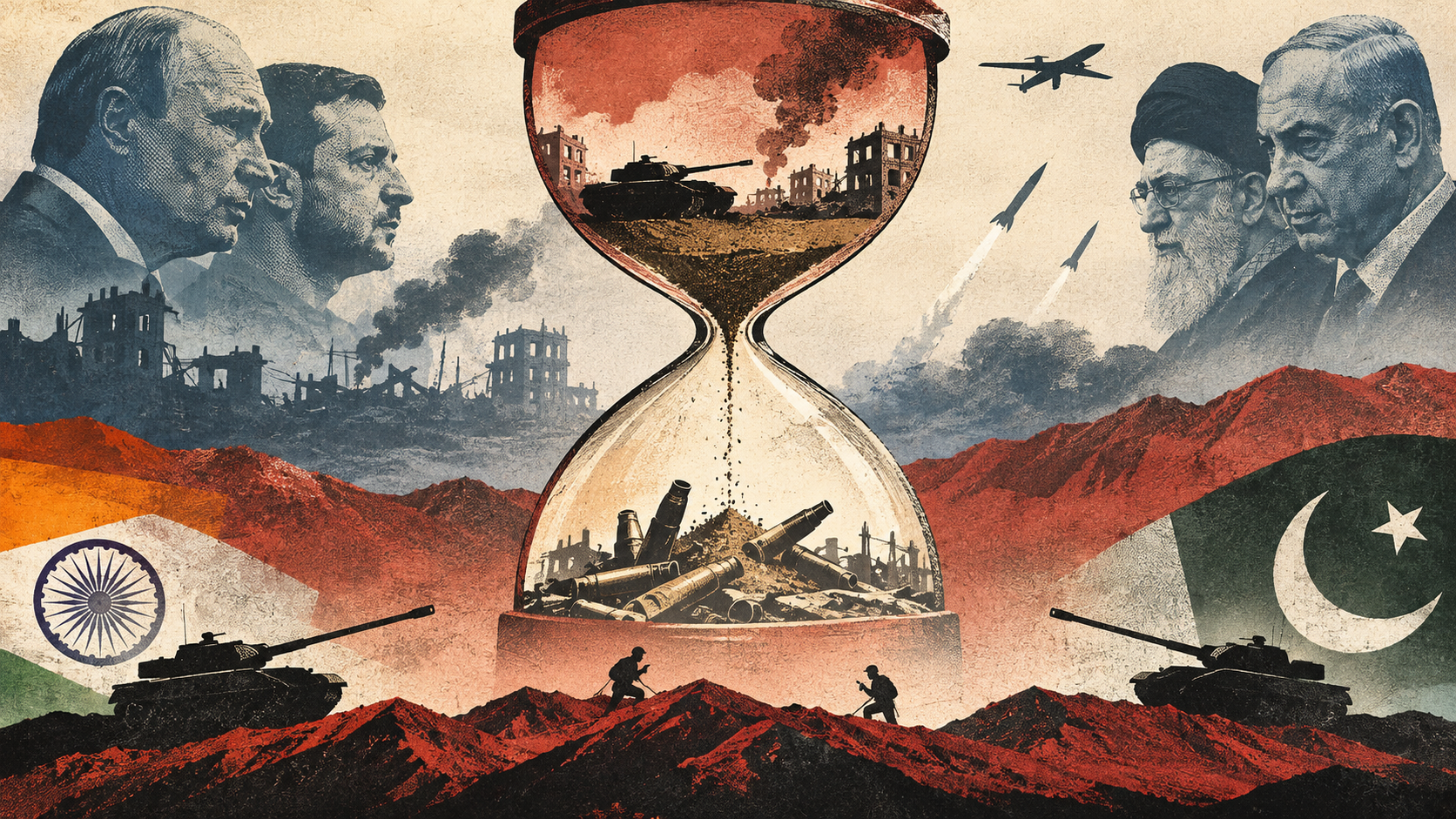
In recent years, conflicts have increasingly stretched from the Russia-Ukraine theatre to South Asia and West Asia. These contemporary conflicts, particularly the Russian-Ukrainian conflict and the West Asian theatre, have been serving as real-time test laboratories, where not only military technologies (both modern and outdated), but also prevailing assumptions and notions about warfare and strategy are being tested. Notwithstanding the fact that each war theatre fields its own unique dynamics, these contemporary conflicts are nonetheless offering important lessons to militaries across the world.
The rise and subsequent incorporation of advanced technologies such as precision-guided munitions, network-centric warfare, and artificial intelligence into military operations allow technologically advanced militaries to quickly and decisively dismantle an opponent’s military capabilities. Hence, advancements in military technologies have largely been understood to render conflicts swift and decisive. This assumption particularly gained ground during the cold war era and held sway afterwards. During the same time, the advent of nuclear weapons, emerged as a key constraining element; particularly in the context of nuclear-armed opponents. It was the sheer escalatory potential of nuclear weapons that discouraged the idea of a conventional war between two-nuclear-armed opponents, leading warfare strategists into discovering ways to avoid wars rather than fight them.
However, more recent conflicts, most significantly the Russia-Ukraine conflict has been offering lessons otherwise. It is demonstrating that despite the militaries possessing considerably-advanced military technologies; wars can nonetheless be prolonged, highly resource intensive, and largely indecisive. Beginning in February 2022, the Russia-Ukraine conflict started off as Moscow’s ‘special military operation’ reportedly planned as a short, coercive campaign. However, cut to 2026, the conflict has entered its fourth year, wherein the two opponents are heavily relying on sustained attacks to wear down one another’s infrastructure and forces, hoping to weaken one another’s economy and morale. On ground, achievement of any operational breakthrough has remained marginal. At the same time, both militaries are employing precision-guided munitions, drones, and more so armour and artillery to overwhelm one another’s military capabilities. In other words, attrition has been a key feature of warfare strategies of both militaries.
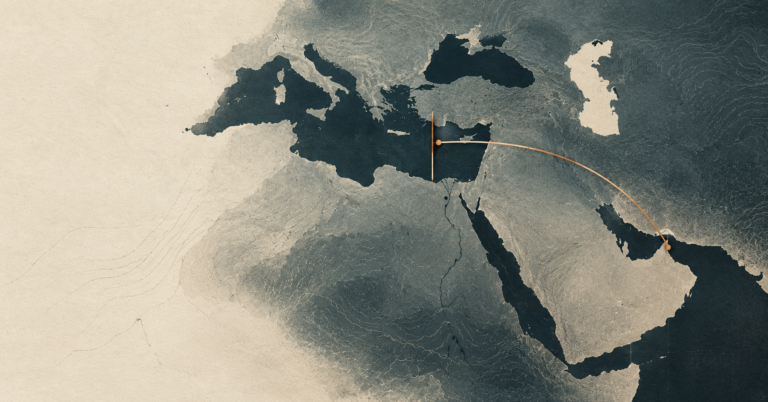
A somewhat similar trend has appeared in the recent military confrontation between Iran and U.S-Israel. Washington’s Operation Epic Fury, which was initially framed as a four-to-six weeks long campaign. It has also stretched into a months-long campaign. Here, Tehran in particular has demonstrated an ability to impose an inverted cost-exchange ratio on U.S. forces. Its continued employment of missiles and drones, despite extensive U.S.-Israeli strikes, has compelled its adversaries to expend costly air-defense interceptors while sustaining a high operational tempo, thereby imposing high costs on U.S. missile-defense capabilities. Likewise, Tehran has sought to further raise the costs for Washington by targeting U.S. military bases and disrupting traffic through the Strait of Hormuz.
These two case studies are not necessarily textbook examples of attritional warfare. They do, however, demonstrate how the logic of attrition is increasingly reasserting itself in contemporary warfighting, particularly as relatively inexpensive means are employed to impose disproportionate costs on adversaries.
As each war theatre comes with its own set of dynamics; this begs the question that whether growing prominence of attrition in other theatres also be applied to the India-Pakistan dyad. After all, India and Pakistan are both nuclear-armed adversaries a factor that should, limit the appetite for military confrontation, let alone a prolonged one.
However, on the other hand, military confrontations between India and Pakistan have not only become frequent and episodic, but are also demonstrating increasingly escalatory patterns; with each successive crisis pushing the threshold of conventional engagement further. The confrontation in May last year was particularly watershed as a security-intelligence lapse in the Indian-occupied Jammu and Kashmir led New Delhi into launching missile against Pakistan, wherein the confrontation quickly escalated into an exchange of drones, ballistic, and cruise missiles with both sides activating their air-defence systems. The fact that the military confrontation spanned for four days was also equally alarming. While the episode may as well have established a new baseline for future crises, in which the use of drones and missiles could occur much earlier in the escalation ladder, simultaneously it also indicated that willingness of both parties to use drones, loitering munitions and stand-off weapons not just to exhaust expensive air-defence interceptors, but also to attack airbases, runways, and ISR assets.
Yet, while a future conflict could increasingly exhibit elements of attrition, both nuclear-armed rivals have compelling reasons to avoid prolonged military confrontation.
First, the nuclear overhang: While New Delhi has been trying to find space for conventional warfighting under the nuclear overhang, however, this is extremely dangerous for bilateral and regional stability.The nuclear overhangis therefore a strong impetus that can discourage direct military confrontation. In case otherwise, if violence breaks out anyway, as was the case in May last year, the nuclear overhang must then compel both militaries to keep operations limited – in both scope and duration. Both India and Pakistan must duly recognize that possessing nuclear weapons creates an escalation ceiling which renders sustained and increasingly costly conventional warfare inherently risky and escalatory. Furthermore, as Pakistan’s nuclear posture fundamentally seeks to offset India’s conventional superiority, hence any attempts to progressively degrade Islamabad’s military capabilities could be detrimental.
Second, third-party interventions: Amid almost absent bilateral crisis management or conflict resolution mechanisms, third party intervention becomes the obvious and urgent quick fix. As a consequence, third-party interventionhas continued to remain a characteristic feature of India-Pakistan military confrontations. While this factor does not deter either side from adopting attritional strategies, however it may constrain the duration of hostilities, limiting the likelihood of a confrontation extending over months or years. In this context that May 2025 confrontation was less indicative of the emergence of prolonged bilateral conflict, and more indicative of the growing willingness of the two sides to generate conventional attrition within a short period.
Third, finite economic and logistical resources: This could be perhaps the most important constraining factor with regards to sustaining attrition in warfare. Prolonged conflicts come with enormous strain on a states’ productive capacities, requiring them to continually generate industrial output, raw materials, manpower, and financial resources for both military (to replace equipment losses and to sustain forces in the field) and civilian purposes. As wars drags on, the costs of maintaining supply lines, transporting material, and equipping replacement units tend to rise, at times outpacing states’ ability to generate revenues through civilian economic activity.
Simultaneously, states’ reliance on international supply chains and externally-sourced weapon systems also increase tremendously. In this way, limitations in factors such as human and personnel resources, industrial production, transportation infrastructure, and access to strategic resources serve as ceilings against prolonged combats. In this regard, neither India nor Pakistan has an obvious incentive in sustain a conflict in which military and economic costs continue to accumulate without producing a decisive political outcome.
In conclusion, keeping in view the factors mentioned above, in the case of South Asia, the more plausible trajectory could not exactly be a prolonged conflict featuring attritional tactics, but instead, an accelerated form of attrition within short-duration conflicts. In case of violence breaking, the two rivals may seek to impose costs on each other’s military systems, inventories and infrastructure during brief periods of intense confrontation, while simultaneously relying on the nuclear deterrent and international pressure to prevent escalation into a prolonged war. However, most importantly, For New Delhi, its conventional military superiority or access to advanced technologies or its domestic-political war-enthusiasm should not encourage it to take up military adventurism that can be detrimental to regional peace and stability.
(The opinion expressed in this article belong only to the author and do not necessarily reflect the views of The Convention).
Featured illustration: The Convention / AI-generated with OpenAI.