Who Protects Children on India’s Roads?
India’s child-passenger rules rest on parents making the right choice, but protecting children requires a system designed around them.
The story of ten month old Aalin Sherin Abraham in Kerala, whose parents donated her organs after she suffered fatal injuries following a road crash, raises an even more painful question, what are we doing to protect our youngest passengers?
Garvita remembers visiting London at the age of ten. Whenever she travelled by car, she sat in the rear seat wearing a seat belt. It seemed normal. Back in India, she rarely saw the same consistent attention to where children sat or how they were secured. Curious, she began reading India’s motor vehicle laws.
Section 194B(2) of the Motor Vehicles Act refers to a child under fourteen being secured by a safety belt or a child restraint system. Garvita was struck by the word ‘OR’. If the law allows parents to choose between an ordinary seat belt and a child restraint system, many may opt for the more convenient seat belt. But is convenience a good enough reason to compromise a child’s safety? Younger children need restraints designed for their age and size, not simply seat belts designed for adults.
Other provisions in the Central Motor Vehicles Rules prescribe child restraints in specified vehicles. Why is the overall message not simpler for parents to understand?
This is not an argument against seat belts: older children need correctly fitting belts, while younger children need restraints appropriate to their age and size. The point is that protection must fit the child.
Marushika studied Legal Studies in Classes XI and XII and hopes to pursue law. Looking further into the provisions, she began asking whether a law can be considered effective when the people it aims to protect remain exposed to obvious risks.
As Marushika explored the issue further, she realized that the problem goes beyond how laws are written. We often see children carried on adults’ laps, sitting between a driver and the steering wheel and even travelling in the luggage area of vehicles. On motorcycles, children are especially vulnerable, as they have little control over how they travel. She also found that India has specific requirements for helmets and safety harnesses for very young motorcycle passengers. Yet these protections are rarely visible in everyday travel. It made us wonder whether having laws is enough if children continue to face such risks.
The question of equality matters here. Article 14 of India’s Constitution guarantees equality before the law. But treating children as though they have the same bodies, judgement and control as adults does not necessarily make them equally safe. Meaningful protection sometimes requires different rules for people with different vulnerabilities. The UN Convention on the Rights of the Child also recognises children’s rights to life, survival and development.
So perhaps the question is not simply whether children are treated equally, but whether our laws give them the additional protection they need.
Parents and drivers must make safer choices. A child on someone’s lap is not safely restrained, however lovingly they are held. But parents cannot build a missing footpath, slow traffic outside a school or create affordable alternatives for families who depend on motorcycles.
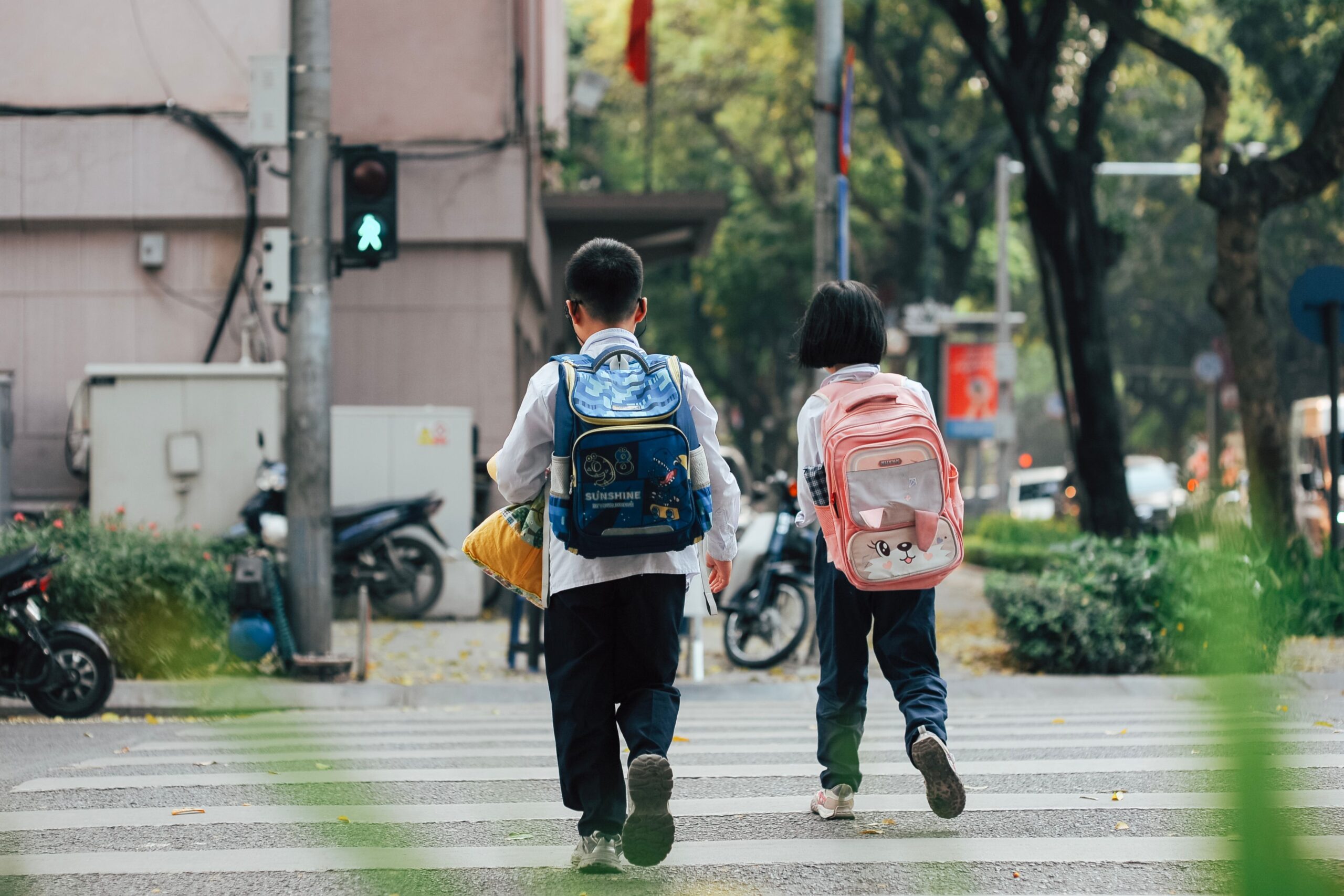
The World Health Organization (WHO) promotes the Safe System approach, which recognises that people make mistakes and calls for roads, vehicles, speeds and safety measures designed to prevent those mistakes from causing death or serious injury. For children, this means safer school crossings, lower speeds where children walk, appropriate restraints and practical ways to travel safely.
Children know which crossings frighten them and which streets feel unsafe. Schools and local authorities should ask students to identify these risks and then act on what they hear. Road safety should be measured not just by awareness campaigns and fines, but by whether fewer children are killed or seriously injured.
We are often called the future of India. But our future depends on being protected now. Parents have responsibilities, and so do governments. Children should not have to become victims before they become visible in public policy.