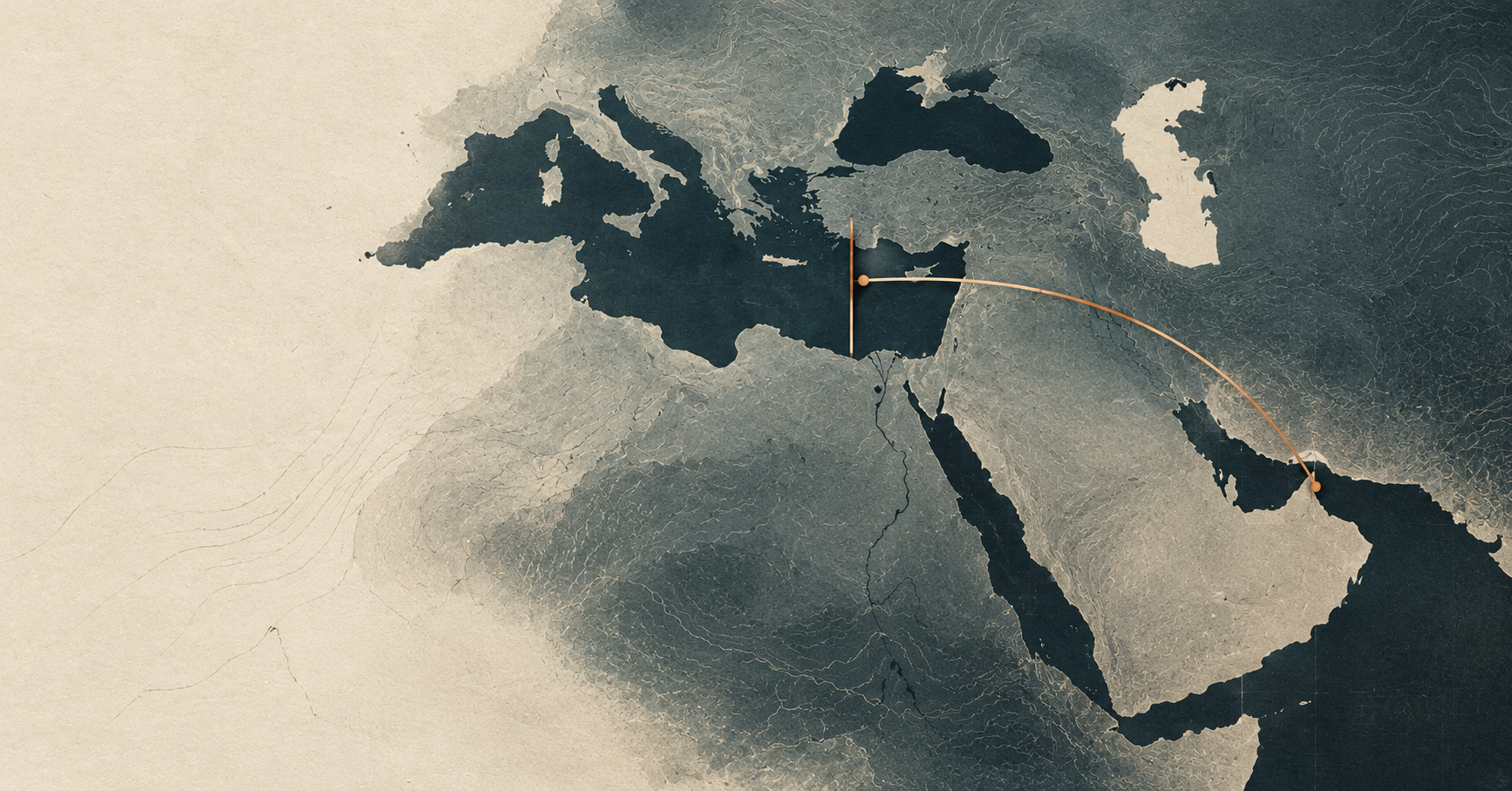
Algeria-UAE Rift: The Geopolitics Behind a Wider Regional Divide
On 10 September, Algeria severed diplomatic relations with the United Arab Emirates, accusing Abu Dhabi of hostile acts and giving its ambassador 48 hours to leave. The complete collapse of Algerian – Emirati diplomatic relations represents the long standing culmination of structural foreign policy divergence that has finally dismantled diplomatic apparatus with the UAE after years of mounting institutional hostility and provocation. Algiers formal termination of diplomatic relations with the United Arab Emirates intensified by what Algerian authorities described provocative and persistent Emirati hostility.
Algeria’s foreign ministry framed Abu Dhabi’s regional manoeuver as calculated, manipulated and systematic provocation incompatible with sovereign state relations. Solidifying its diplomatic breach, Algiers advanced its retaliatory action by declaring an immediate airspace ban against all UAE registered aviation and military aircraft, while maintaining a strict exemption for ongoing commercial routes to honour existing transport agreements through the end of 2026.
The UAE said it hoped the decision would be temporary. In a statement issued by UAE foreign ministry said,
“In light of the decision by the People’s Democratic Republic of Algeria to sever relations with the United Arab Emirates, the UAE reaffirms the importance it attaches to its relations with all countries and its commitment to developing and strengthening them to serve shared interests and promote understanding, cooperation and prosperity. The UAE expresses hope that this decision will be temporary, in a manner that preserves the fraternal ties between the two brotherly peoples. Furthermore, the Ministry of Foreign Affairs (MoFA) affirms the UAE’s appreciation for the brotherly Algerian people and its pride in the bonds that unite the two peoples, particularly through the Algerian community residing in the UAE and Algerian visitors. The UAE remains committed to preserving and strengthening these ties and shared interests”.
Anwar Gargash, a diplomatic adviser to the UAE president, wrote on X that diplomatic relations should be based on “rationality, communication and clarity of interests” rather than “riddles and signals that require decoding”, but he didn’t explicitly mention Algeria.
Algeria rejects normalisation with Israel. The UAE and Morocco, by contrast, normalised relations through the US-brokered Abraham Accords in 2020.
The bilateral escalation is exacerbated by the long standing Western Sahara conflict, where Algiers and Abu Dhabi occupied opposing sides of the territory, the UAE institutionalisation of Morocco’s territory as sovereign through diplomatic recognition and consular assistance while Algeria backs Polisario Front’s national liberation.
The collision and intensification of Algerian and Emirati strategies is more pronounced than in the Sahel security zone, as Abu Dhabi aggressively pursued economic influence and military dominance across West Africa, at the same time Algiers struggled to maintain its influence systematically eroded by the wave of war, violence, coup and military interventions destabilising its borderlands and balance of power.
Algerian President Abdelmajid Tebboune has often called UAE as a “Micro State” meaning a kind of state involved in destabilisation and destruction of countries in the region including Libya, Mali and Sudan. “Wherever they set foot, blood flows,” he said in a televised interview in July, adding that the UAE has had a “very negative impact, We want them to stay away, so that blood does not flow in our country,” he added, causing enormous negative reverberations in the Arab World.
“Algeria has decided to cut diplomatic relations with the United Arab Emirates, following the exhaustion of all means to preserve bilateral relations,” Algeria’s state television announces.
The Algerian government has accused the UAE of interference and meddling in its internal and external affairs including allegedly supporting separatist forces the Movement for the Self-Determination of Kabylie (MAK).
Algeria is therefore not only an isolated case in the UAE’s recent pattern of regional conflict, moreover Somalia terminated its agreements with Abu Dhabi including ports, security and defence allegations levelled against UAE that it threatened its sovereignty, national unity and political independence. Abu Dhabi’s deepening relationship with Somaliland has divided North Africa and the Middle East into a more complicated conflict. Furthermore Israel is the only UN member that officially recognised Somaliland as an independent and sovereign state through a joint declaration signed between Israeli Prime Minister Benjamin Netanyahu and Somaliland President Abdirahman Mohamed Abdullahi on December 26, 2025.
The UAE’s regional entanglements extend well beyond its deteriorating diplomatic relations with Algeria. Sudan has alleged that Abu Dhabi is backing the Rapid Support Forces (RSF) amid the state’s devastating civil war with catastrophic consequences, claims the Emirati government which Abu Dhabi has consistently denied. This ethnic cleansing in Sudan took another turn when Sudan accused the UAE of providing drones allegedly employed in attacks originating from Ethiopian territory.
The UAE’s differences with Saudi Arabia show that these tensions reach beyond Algiers. In Yemen, relations deteriorated after the Southern Transitional Council, a separatist group widely described as UAE-backed, seized territory in Hadramout and Al-Mahrah. On 30 December 2025, a Saudi-led coalition airstrike hit what the coalition said were weapons and combat vehicles unloaded at Mukalla port from ships arriving from the UAE. The UAE denied that the shipments contained weapons and said they were destined for its own forces. Yemen’s Presidential Leadership Council then dissolved its defence pact with the UAE and gave Emirati forces 24 hours to leave, a demand Saudi Arabia backed. The UAE announced that it would withdraw its remaining forces, saying it acted of its own volition. The episode exposed a divergence between two Gulf partners over Yemen’s political and security order.
The rupture between Algiers and Abu Dhabi is best read as the sharpest point of several separate disputes, not the opening of a single regional front. Algeria’s quarrel with the UAE over Israel, Western Sahara and the Sahel, Somalia’s dispute over Somaliland, and Saudi Arabia’s clash with the UAE in Yemen each have their own causes, and Abu Dhabi has denied the central accusations in several of them.
What links them is the language of sovereignty. Each government accuses Abu Dhabi of undermining its security or territorial integrity, and each has answered with formal measures, from an airspace ban to cancelled security agreements.
Three developments will show how far the divide deepens. The first is the end of 2026, when the exemption for Emirati commercial flights to Algiers expires. The second is whether Algeria’s position softens, given that President Tebboune said on 5 October that the decision will not be reversed. The third is whether the governments in dispute with Abu Dhabi, including Algeria, Somalia and Saudi Arabia, coordinate more closely or keep their quarrels separate. For now, the evidence supports a pattern of friction, not a bloc.
(The opinion expressed in this article belong only to the author and do not necessarily reflect the views of The Convention).