Human Rights; Identical in Sense Different in Weight, The ‘Why’ of the Forgetting
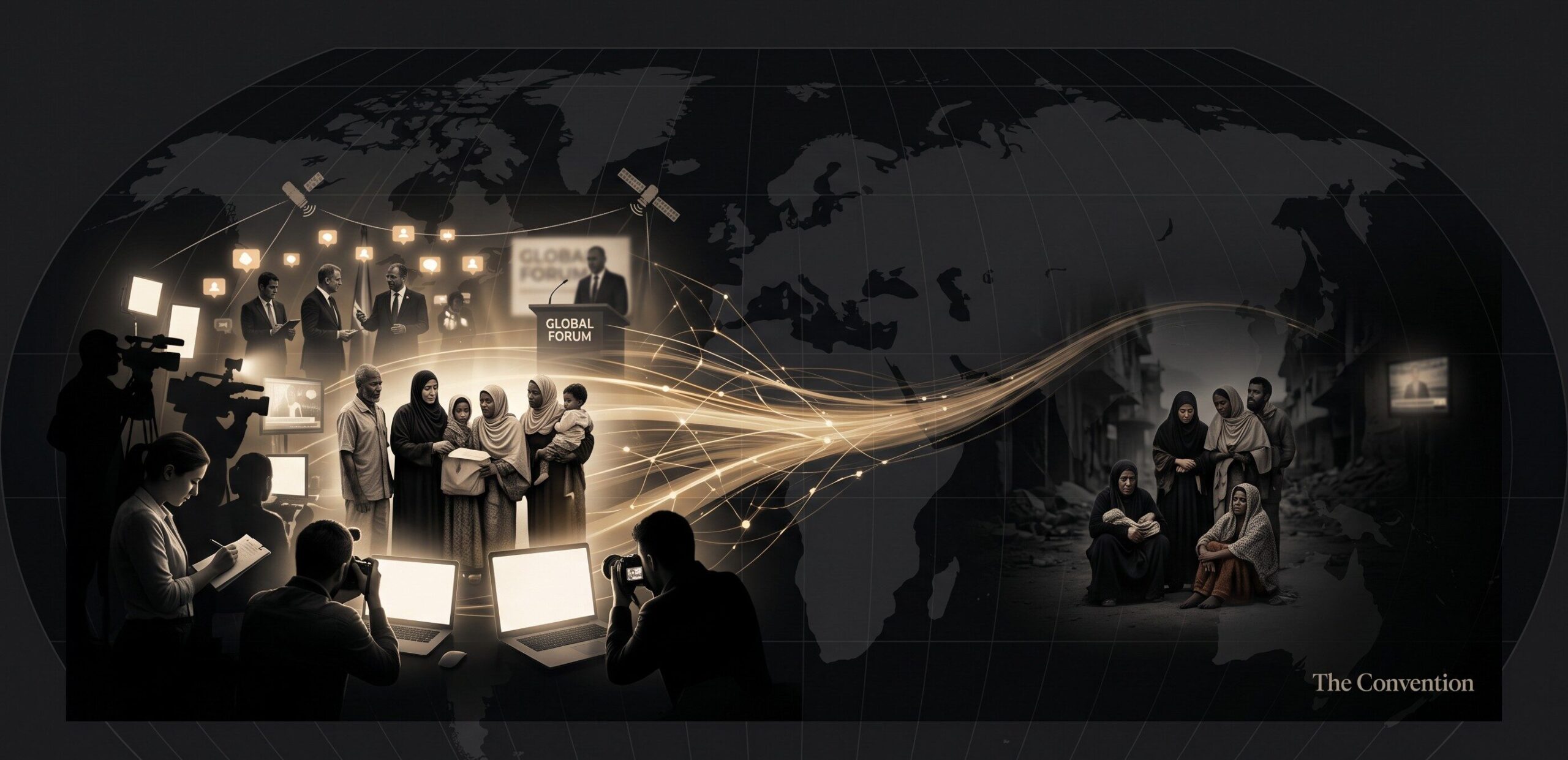
As witnessed, two humanitarian crisis unfold in a same month, causing similar levels of death and displacement, yet, receiving completely different amounts of global attention. One becomes a sustained global story, with daily coverage, celebrity involvement, and diplomatic summits called specifically to address it. Meanwhile, other gets a brief mention, perhaps a short mention on the news, and then disappears from the public conversations within a weak, even though tge suffering continues for months or years. This pattern is not random. It follows a fairly predicable logic,once you know what to look for,and understanding that logic is the focus of this part.
The first factor, what media researchers, studying media coverage call it proximity, and it works on several level at once. Similarly, geographic proximity matters, since audiences in wealthy media producing countries tend to pay more attention to crisis happening in regions they consider culturally or historically closer to them. Moreover, political proximity matters even more than geographic proximity. A crisis involving a country that is a close ally, a major trading partner, or a strategic asset tends to receive more sustained coverage than a crisis in a country with weaker political connections to major global powers, even when the global cost is comparable or greater in the less covered case.
The second factor is what can be called a narrative fit. International media and diplomatic instructions tend to give more sustained attention to a crisis that fit into an existing story they are already telling about the world. A crisis that confirms a familiar narrative, a rival power behaving badly, an enemy state oppressing its people, tends to receive immediate and sustained coverage because it fits neatly into frameworks audiences and policymakers already understand. On the other hand, a crisis that does not fit neatly, particularly one involving an ally, or a country whose internal politics are complicated or hard to summarize in a single sentence, oftern struggles ti gain the same traction, not because it matters less, but because it takes more effort to explain, and does not reinforce a stroy that is already being told.
There is also a third factor that also requires close examination, which is what can be called identity of the victams in the eyes of the audience consuming the coverage. Studies on media coverage on disasters have repeatedly found that crisis affecting populations that are seen as more distant or different, even when fhe scale of suffering is the same. This, undoubtedly is an uncomfortable finding, but it echoes something the Philosopher Judith Butler wrote when addressing a different but related subject, that some lives are treated as inherently more grievable than others within a given cultural framework, not because a conscious moral judgement is being made, but because unconscious patterns of who counts as fully human, fully worthy of collective mourning, shape media, political and public responses before any careful decision is even made.
Understanding these three factors political proximity, narrative fit, and audience identification, helps explain why the world can watch one crisis with intense, sustained attention while another crisis of similar receives a few days of coverage before slipping into silence. It is not usually the result of a deliberate decision by any single actor to ignore suffering. It is the culminative result of many smaller decisions, made by editors choosing which stories to run, diplomats choosing which stories to prioritize in limited meeting time, and audience choosing which stories to click on and share, each decision shaped by the same underlying patterns of proximity and familiarity.
This matters practically, not just morally, because sustained international attention is often the single mosy important factor in determining whether whether a humanitarian crisis receives adequate aid, diplomatic presure, or eventual resolution. A crisis that fades from public within days, often fades fron diplomatic priority as well, since governments generally respond to what their citizens are paying attention to. This creates a difficult cycles. The crisis that most need sustained global presure to end are often ones least likely to receive it, precisely because they lack the proximity or narrative fit that generates that presure in the first place.
Non of this means individual journlists, diplomats, or ordinary citizens are acting inbad faith when they pay closer attention to some crisis than others. Human attention is a limited resource, and it is genuinely difficult to sustain deep concern for every crisis happening simultaneously around world. But recognizing the pattern is first step towards correcting it, both individually and institutionally.
In the next final part of this series we will look into what a more consistent approach to human rights attention might actually require, and whether international institutions can be reformed to reduce this sekectivity, or whether the underlying political incentives make truly equal attention structurally impossible.
(The opinions expressed in this article belong only to the author and do not necessarily reflect the views of The Convention).