Series: War, Peace, and Justice: A Philosophical Inquiry
Part I: Hobbes and the Fear That Gave Birth to the State
This essay consists of four pieces, analyzing war, justice and peace. Particularly, it examines the context and relevance of contemporary geopolitical dynamics, prior to the the Gaza conflict, and the the application of broader concepts of State, citizenship, and human rights. In this part, i would like to start from the fundamental question of political philosophy: Why do humans establish states?
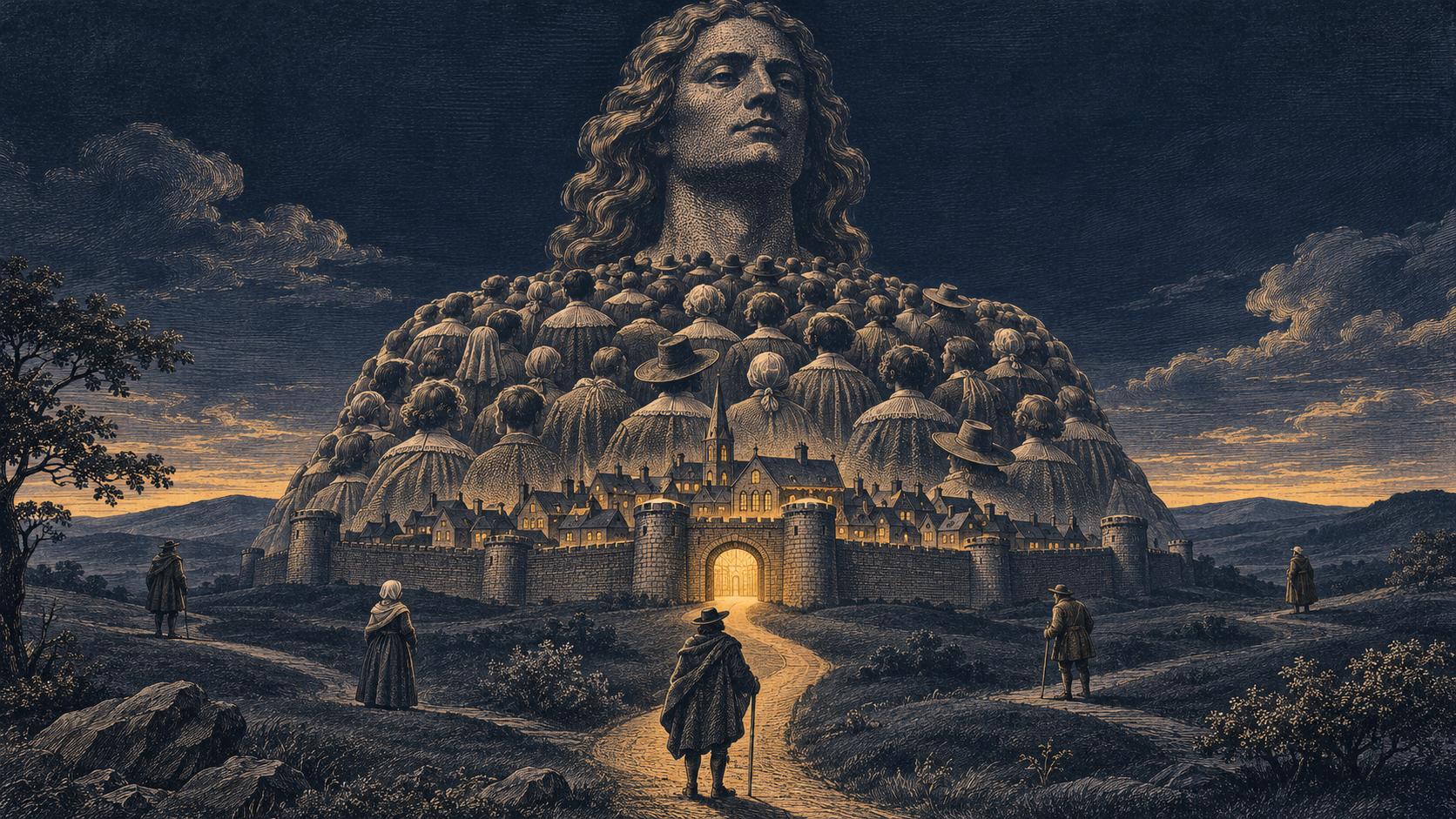
Seventeenth-century philosopher Thomas Hobbes wrote his book “Leviathan” during a period of civil war. Hobbes, presents a condition without a common authority able to enforce rules, which he calls the natural state. A world where there is no government, no law and no central power. Hobbes believes that, life in such a situation would be “solitary, poor, nasty, brutish and short” because when there is no authority to settle disputes, every person, however, virtuous, is compelled to take preemptive actions to secure their own safety. It is a situation, governed by fear, where everyone wages war against everyone. This, as per Chapter XIII of Leviathan, is not because human beings are inherently evil, but because because insecurity itself gives rise to violence.
Thomas Hobbes’ solution was for people to surrender some of their freedom to a central authority, through a social contract he called the Leviathan, so that peace may be sustained. An important point to note is that, according to Hobbes, this contract does not arise from ideal principles, but from fear and necessity of survival. Human beings accept the state not because they consider it good, but because the alternative—uncertainty and violence—is far more frightening.
Now, if we look at international politics, philosophers often compare the the international system to Hobbes’ State of nature because there is no central authority above states that can make a final decision, as Hobbes’ Leviathan does. For instance, the the United Nations, International Courts, and Treaties are all present, but they lack the authority that a government holds within a state. This is why, when ceasefire agreements are reached in conflicts like Gaza, there is no central authority to enforce them; instead enforcement depends on states that are themselves parties to the conflict or acting as mediators. In Hobbesian language, the international community has not yet emerged from the state of nature.
In the next part, we will explore how Immanuel Kant responded to Hobbes’ pessimistic view and proposed the idea of Perpetual Peace, a vision that underpins, in one way or another, the foundations of international institutions today. If states have no common sovereign, can they still build a lasting peace through rules they agree to follow?
Image Credit: AI Generated by the Team The Convention