Human Rights : Identical in Sense but Different in Weight, Part One The Weight
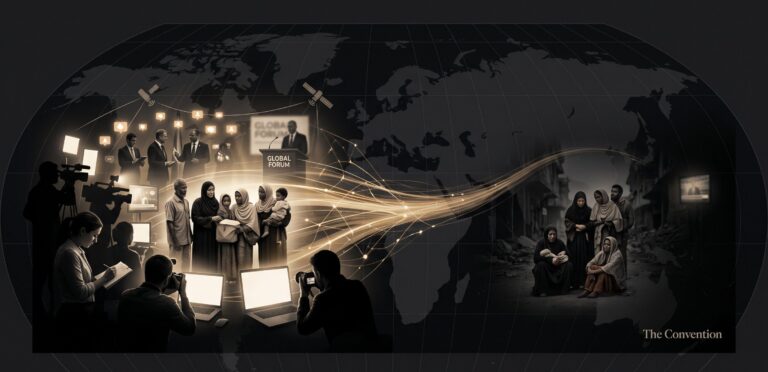
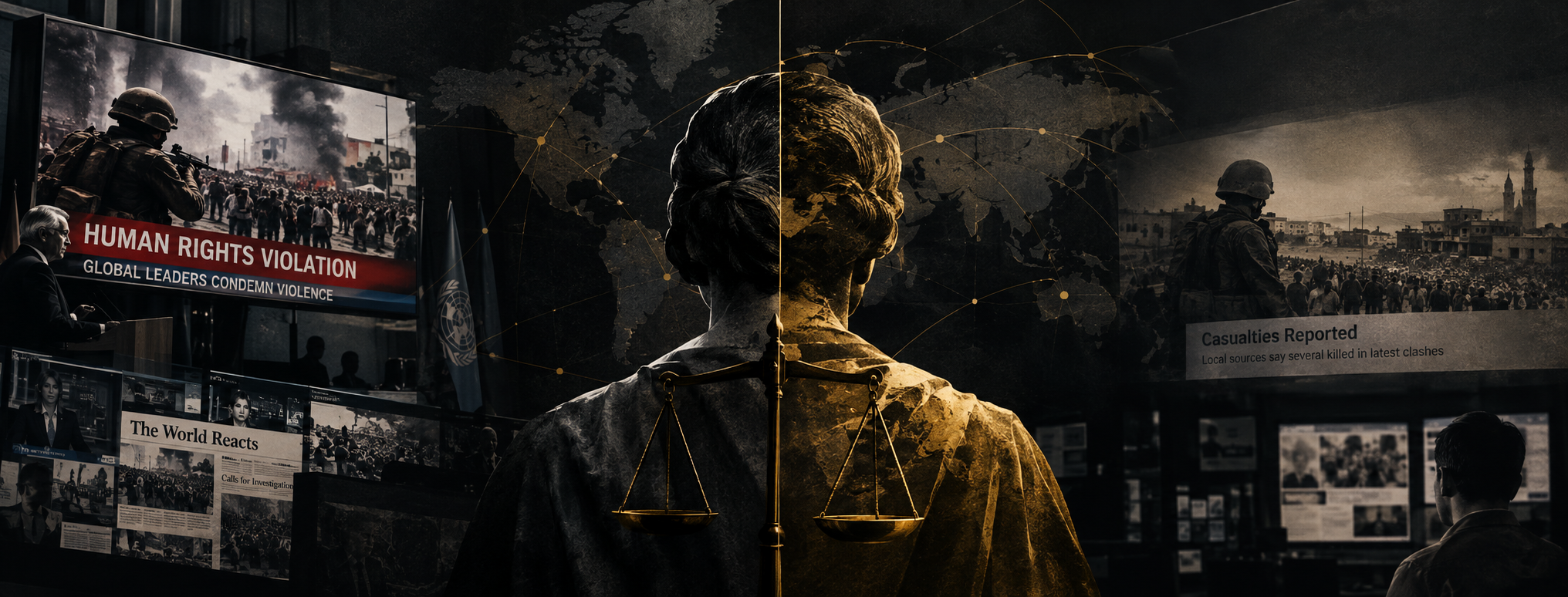
A soldier fires into a crowd in one country and it becomes a headline, running for several months of global news channels, condemned by Presidents, Investigated by International Bodies. While, a soldier fires into a crowd in a different country and it becomes a short wire report, mentioned once, then Forgotten by next news cycle. The word “Human Rights Violation” used for describing both events is same, however, the weight of it varies, changes depending on where the event happened and who is involved, the question. Does the color of human blood changes when it crosses borders?. This is where i want to start, because before we talk about human rights as a system, we have to admit that something uncomfortable about it as a language.
Historically, the modern human rights framework was built after Second World War with a simple and powerful central at its centre. Every human being regardless of nationality, religion, or political system, has certain rights that no government has authority to take away. This idea produced the Universal Declaration of Human Rights in 1948, a document the remains genuinely remarkable for it ambition. It tried to create a single moral standard that would apply equally to every country on earth, rich or poor, powerful or weak, allied or hostile.
But as witnessed, an idea and its application are completely two different things, and the gap between them is where the story human rights politics lives. Almost from the beginning, the enforcement of human rights standards has depended heavily on power, not principle. When a weak country with no strategic importance gets commits a violation, the international system can respond with real pressure, sanctions, investigations, public condemnation. When a powerful country, or an ally of powerful country a similar violation, the response is often muted, delayed, or framed in much softer language. This is not a secret pattern. It is visible to anyone who compares how international bodies talk about different conflicts happening at the same time.
The Philosopher Hannah Arendit, writing after the horrors of the twentieth century, made an observation, explaining that gap better than any moden analysis. She argued rights only become more real when they are backed by the political power of a state willing to enforce them. This is an uncomfortable truth because it means the international rights system was never built as a neutral referee, standing above all nations. It was built as a set of principles the require political will to activate, and political will is never distributed equally.
The uneveness produces what can be called selective attention. The same category of act, forced displacement, extrajudicial killings, restriction of a free press, gets classified differently depending on who commits it. When it happens in a country with strong alliances to powerful nations, it often gets described using a softer language, security operation, internal matter, complex situation requiring restraint from all sides. Similarly, when it happens in a country with weak alliances, or in a rival nation, the same act quickly becomes atrocity, crackdown on systematic abuse, the facts on the grounds may be nearly identical, the vocabulary used to describe them is not.
It would be easy to conclude from this that human rights language is simply fake, a tool used cynically by powerful country to punish rivals while protecting friends. This conclusion is tempting but not simple, and it misses something equally important. The existence of selective enforcement does not prove that underlying principle is false. It proves that humans, even when they build good systems struggle to apply those systems consistently when their own interests are involved. This is true of law within any single country as well. Wealthy defendants often receive better legal outcomes than poor defendants facing similar charges, not the law itself says rich people deserve more justice, but because power finds ways bend even well designed systems towards itself.
Understanding this distinction matters because it changes what kind of reform is actually needed. If human rights language were entirely fake, the honest response would be to abandon it completely. But if the problem is selective and inconsistent application of the genuinely important idea, than the real task is not to throw the language of human rights, but to keep pushing for consistency, to keep naming the gap, when it appears, and to resist temptation to only care about violations when they are politically convenient to care about.
In the next part. We will look closely at how this selective language actually operates in practice particularly through the way international media and diplomatic institutions decide which crisis deserve sustained attention and which ones fade into silence within days, even when the human suffering involved is comparable in scale.
(The opinions expressed in this article belong only to the author and do not necessarily reflect the views of The Convention).