How the Strait of Hormuz Shapes Global Energy Security
The global economy depends on shipping routes that often receive little attention until they are threatened. When a major route is disrupted, the effects are not confined to the sea. They can spread across countries, affecting fuel prices, transportation costs, trade and industrial activity. The Strait of Hormuz is one of the clearest examples of how a narrow waterway can have consequences for the wider global economy.
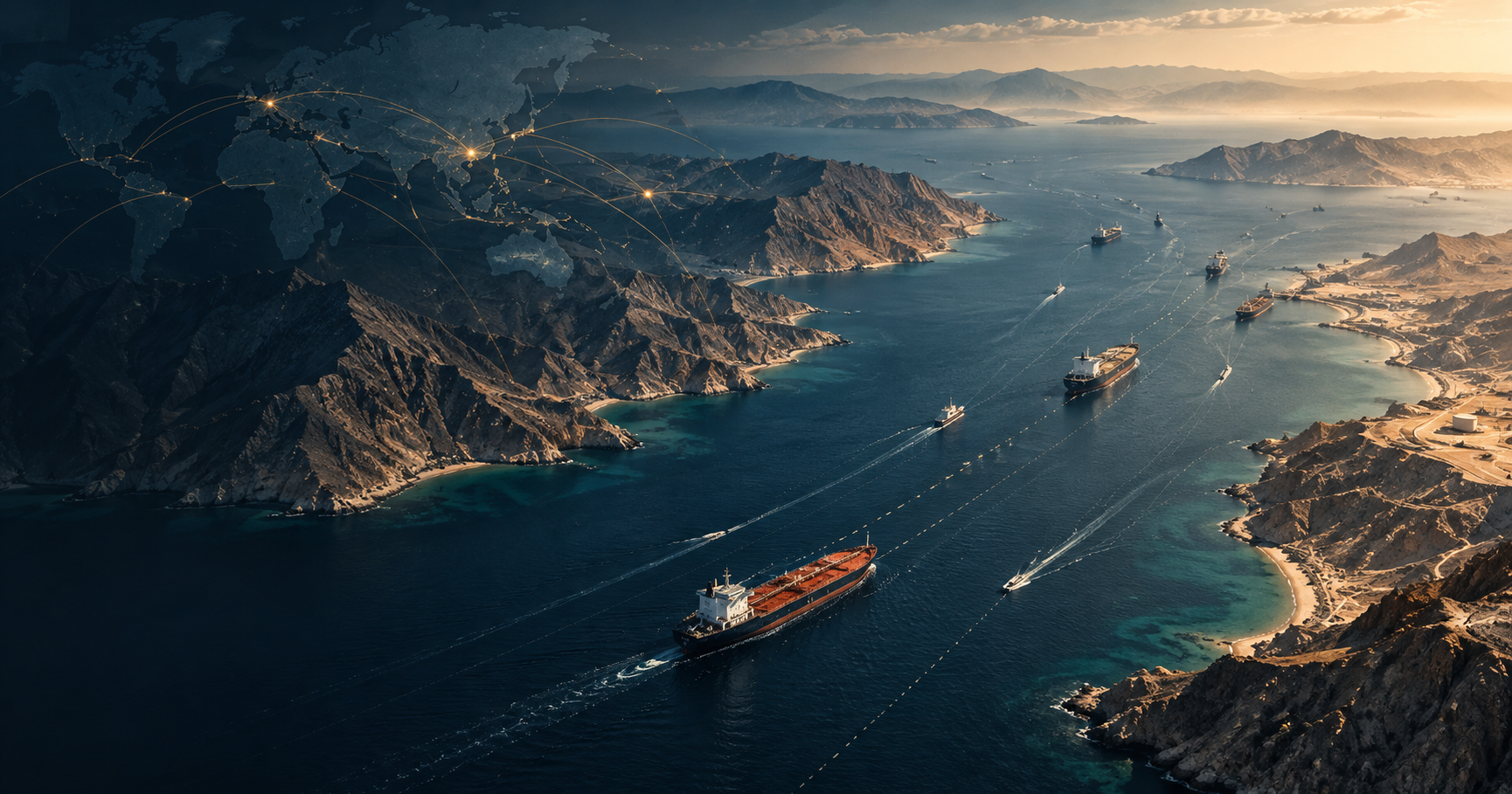
Located between Iran and Oman, the Strait of Hormuz connects the Persian Gulf with the Gulf of Oman and the Arabian Sea. It has long served as an important route for energy exports. Its significance, however, goes beyond its geographical location. The uninterrupted movement of oil and other essential resources through the strait remains important to countries that depend on imported energy.
According to the International Energy Agency (IEA), nearly 20 million barrels of oil per day passed through the strait in 2025. This accounted for around a quarter of global seaborne oil trade, with a substantial share of these supplies heading to Asian markets. These figures explain why instability in the Strait of Hormuz can quickly become an international economic concern.
The strait also highlights an important principle of international relations: geography can give a country strategic influence that extends beyond its economic or military strength. At its narrowest point, the Strait of Hormuz is approximately 21 nautical miles, or 39 kilometres, wide. The navigable shipping channels are narrower still. This concentration of maritime traffic creates a strategic vulnerability. Unlike some trade routes, the strait cannot easily be bypassed without increasing costs and placing additional pressure on alternative routes.
Iran’s position along the northern coast gives it an important role in the security of the waterway. However, the strait is not under Iran’s exclusive control. Oman also borders it, while international maritime law protects navigation through straits used for international passage. The security of the route therefore has implications for countries far beyond the region.
A disruption does not necessarily require the strait to be closed completely. Threats against commercial vessels, attacks on tankers, naval confrontation or uncertainty about the safety of passage can be enough to discourage shipping companies from using the route. Even when oil continues to move, the perception of risk can affect markets, insurance costs and shipping decisions. The International Maritime Organization has warned about attacks on international shipping and reaffirmed the right of transit passage through the strait.
Recent developments have demonstrated how sensitive energy markets are to these risks. In October 2026, attacks on vessels near the strait and rising tensions involving Iran increased concerns about energy supplies. Reuters reported on October 14 that Brent crude had settled above $106 per barrel amid fears of further disruption. The significance of such a rise lies not only in the price itself, but also in how quickly markets respond to the possibility of a supply shortage. In this context, the ability to threaten a strategic chokepoint can become a source of geopolitical leverage.
The consequences of a disruption would extend beyond the energy sector. Oil is an essential input in transportation, agriculture, manufacturing, logistics and many industrial processes. When supply becomes uncertain, markets respond not only to actual shortages but also to the possibility that shortages may occur. Prices can rise before physical supplies are exhausted, while shipping companies may face higher insurance premiums and operating costs.
The International Energy Agency’s 2026 analysis of the disruption describes a major shock to global oil supply, with flows through the strait falling sharply during the initial months of the conflict. Emergency stock releases, alternative export routes, additional supplies from other producers and adjustments by refiners helped reduce the impact. These measures can provide relief, but they cannot remove the strategic importance of the waterway or fully replace the volumes that normally pass through it.
Asian economies face particular risks because a significant share of the oil transported through the Strait of Hormuz is destined for Asian markets. China, India, Japan and South Korea are among the major destinations. For Pakistan, the issue is especially important. A country that relies on imported petroleum is vulnerable not only to higher international prices, but also to changes in the exchange rate, freight charges, insurance costs and the availability of foreign currency to finance imports.
Higher international oil prices can increase the domestic cost of petrol, diesel and other petroleum products. More expensive diesel affects freight transport and agriculture, while higher fuel costs can place additional pressure on electricity generation and industrial production. The impact can eventually reach households through the prices of goods and services. A disruption in a distant waterway can therefore become an economic concern for ordinary people in Pakistan.
The Strait of Hormuz illustrates how economic interdependence does not automatically prevent conflict. Countries may compete politically while remaining connected through trade, energy, finance and shipping. When conflict threatens these connections, the economic costs are not limited to the countries directly involved. They spread through the international system, affecting consumers, businesses and governments alike.
The challenge for energy-importing countries is to reduce their exposure to such disruptions through stronger energy planning, diversified supply sources and more resilient economic policies. Yet alternatives take time and investment to develop. As long as a substantial share of the world’s oil continues to pass through the Strait of Hormuz, its security will remain an international concern. The waterway is a reminder that control over a narrow passage can influence the economic choices of countries across the world.
(The opinion expressed in this article belong only to the author and do not necessarily reflect the views of The Convention).