2026 US Midterm Elections: What Changes for Trump’s Foreign Policy?
Democrats have reclaimed Congress, but presidential power remains largely intact. The real test is whether America’s divided government can reshape its foreign policy.
The American electorate has changed the balance of power in Washington. In the November 3 midterm elections, Democrats secured control of both the House of Representatives and the Senate, ending Republican dominance of Congress and opening a new chapter in Donald Trump’s presidency.
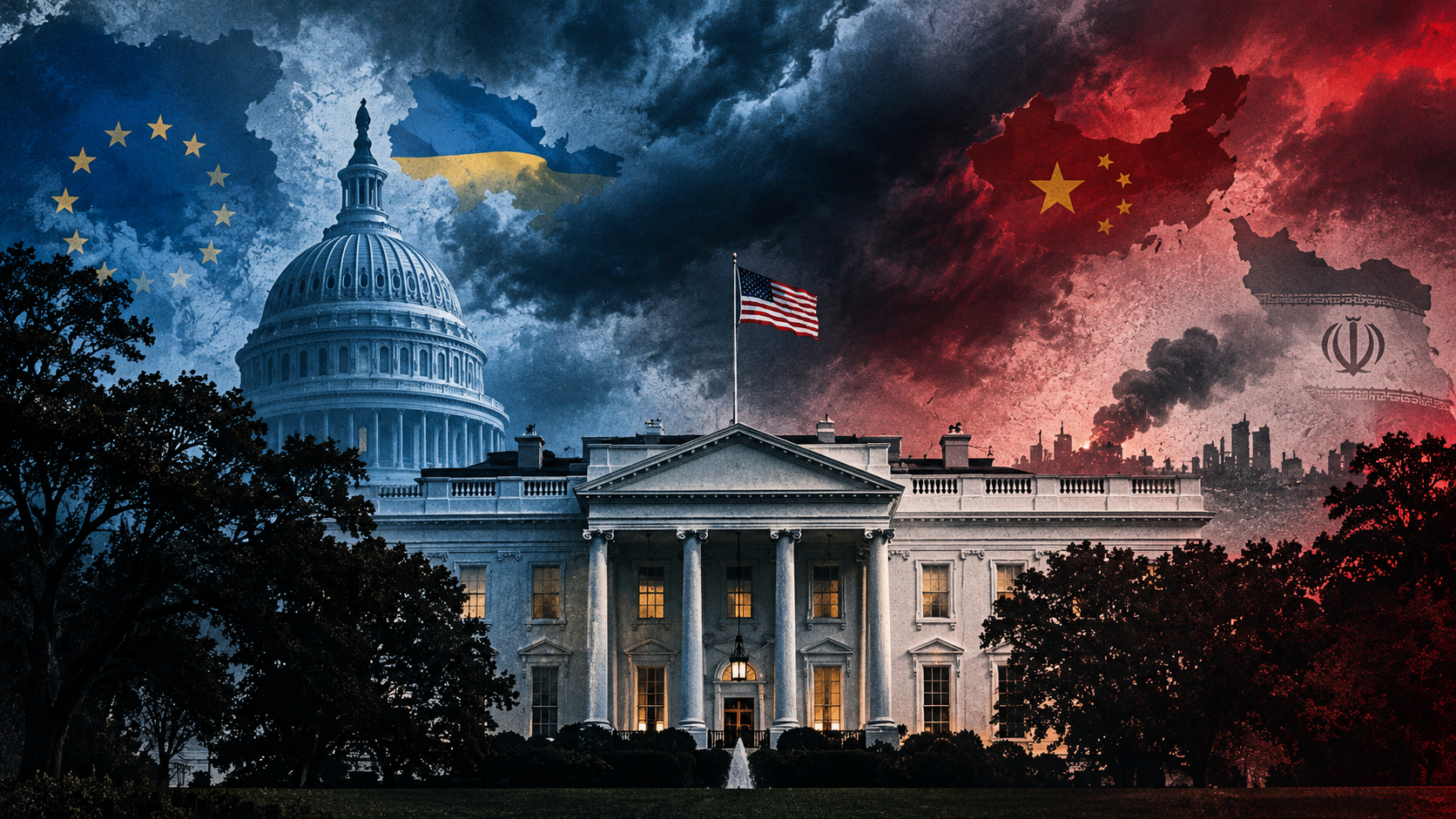
Yet the consequences extend far beyond Washington. From the war with Iran to the future of Ukraine, relations with China and the reliability of American commitments to Europe, the election raises a question of global significance: How much can a divided American government actually change U.S. foreign policy?
The answer lies not simply in who controls Congress, but in how its constitutional powers are exercised.
Congress Has Power, but Not the Presidency
The Democratic victory gives the opposition meaningful institutional authority. Congressional committees can investigate executive decisions, demand documents, scrutinise military operations and question senior administration officials. The Senate can also influence foreign policy through its confirmation powers over diplomatic and national-security appointments.
Most importantly, Congress controls federal appropriations. Military spending, foreign assistance and diplomatic programmes depend on legislative decisions.
But these powers have limits.
President Trump retains considerable authority over diplomacy, executive actions and military operations. He also retains the presidential veto, meaning that legislation opposed by the White House may require substantial bipartisan support to become law.
The result is not a transfer of foreign-policy leadership from the White House to Congress. It is a redistribution of institutional leverage.
Congress can make presidential decisions more difficult to implement without necessarily being able to prevent them.
The Middle East: A Test of War Powers
The ongoing war with Iran represents an immediate test of the new political balance.
The conflict has intensified scrutiny of presidential war-making authority, particularly over military action undertaken without prior congressional authorisation. Democrats have already challenged the administration’s approach, and their new congressional majorities will provide additional opportunities for oversight and legislative pressure.
Yet ending a military confrontation is more complicated than passing a resolution.
Congress can question the administration, examine military expenditure and attempt to impose conditions on future operations. Whether those measures translate into binding constraints will depend on legislative negotiations, executive resistance and the willingness of lawmakers to confront the White House.
The wider Middle East will also be affected. Congressional debates over military assistance to Israel, regional security commitments and diplomatic engagement could become more contentious. For governments across the region, Washington may increasingly speak through competing institutional voices.
Europe and Ukraine: Reassurance Without Certainty
European governments may see opportunities for renewed congressional engagement on transatlantic security. Democratic lawmakers could pursue stronger support for Ukraine, closer cooperation with NATO allies and greater scrutiny of the administration’s approach to European security. However, Congress cannot independently conduct diplomacy or guarantee a fundamental change in presidential strategy.
This distinction matters. European states must assess not only what American lawmakers promise, but what the executive branch is prepared to implement. The midterms may create additional channels for transatlantic cooperation. They do not eliminate uncertainty over Washington’s long-term commitments.
China: Competition Beyond Party Divisions
Relations with China present a different challenge.
Although Democrats and Republicans disagree over aspects of trade policy, tariffs and economic governance, concern about China’s technological capabilities, industrial influence and strategic position extends across party lines. A Democratic Congress could challenge particular administration policies while continuing to support measures addressing supply-chain dependencies, advanced technologies and national security. For Beijing, the election therefore does not necessarily signal a reversal of American strategic competition. The instruments may change. The underlying rivalry is likely to remain an enduring feature of U.S. foreign policy.
The Real Test of Divided Government
The 2026 midterms have created an opportunity to reconsider the relationship between executive authority and congressional responsibility. But political opposition alone is not a foreign-policy strategy. Investigations can expose decisions without reversing them. Congressional hearings can demand accountability without producing legislation. Even funding restrictions can become subjects of prolonged institutional confrontation.
For the new Congress, the challenge is to convert electoral authority into effective constitutional oversight. For the president, the challenge is to govern amid stronger legislative scrutiny.
For the rest of the world, the lesson is equally important: American elections can redistribute power without immediately changing the direction of American foreign policy.
The midterms have altered Washington’s political landscape. Whether they also alter America’s conduct abroad will depend on what its institutions do next.
Image credit: The Convention / AI-generated editorial illustration.