The Silence Around the Mind: Mental Health and Help-Seeking in Rural Balochistan
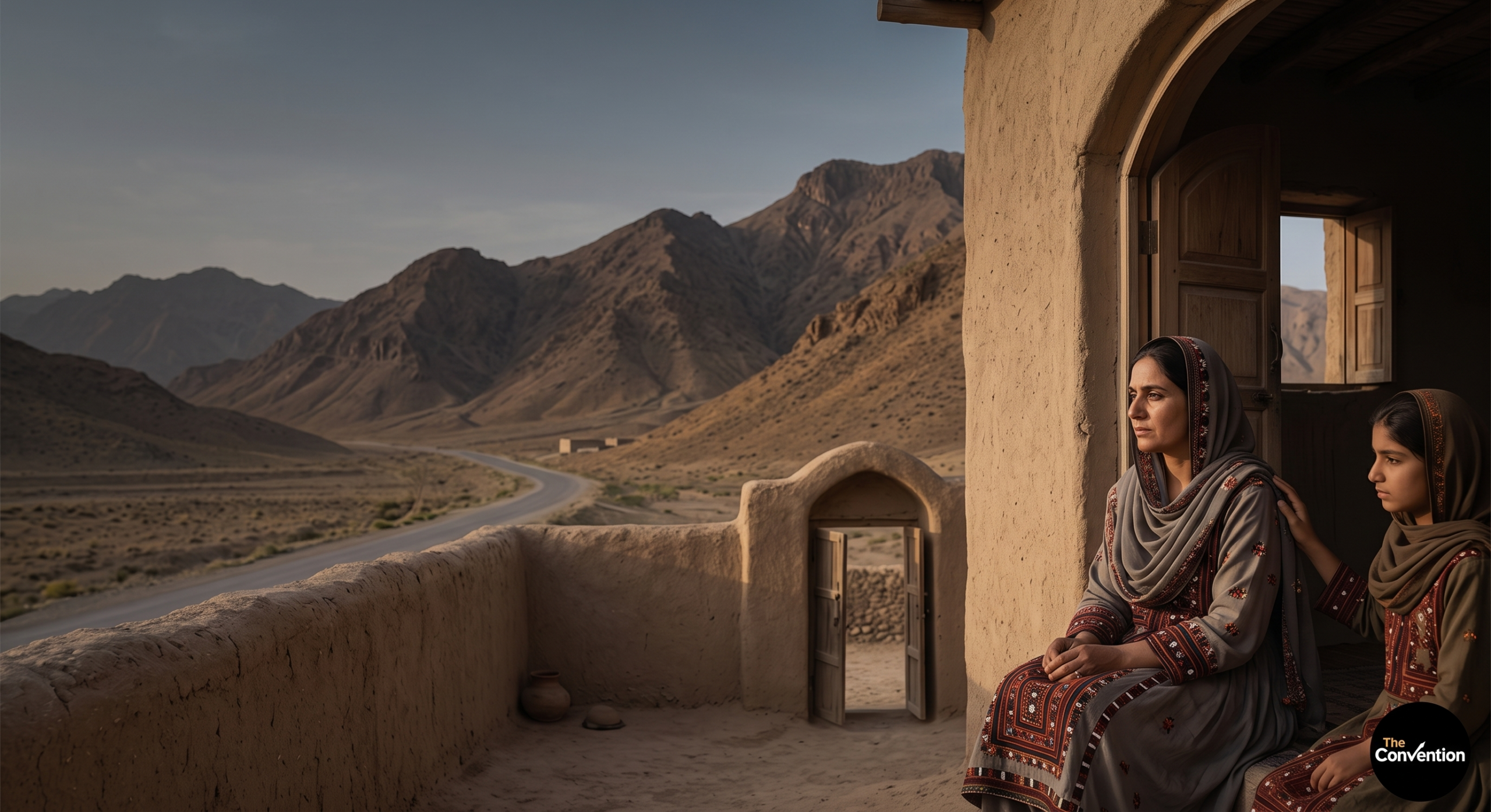
In rural Balochistan, psychological distress is often visible long before anyone gives it a name.
A man who withdraws from family gatherings may simply be described as tired. A young woman who cries often may be told that she is too sensitive. A farmer who has lost his crops and can no longer sleep may be advised to remain patient and place his trust in Allah. If the distress continues, someone may suggest that a jinn has troubled him or her.
Rarely does anyone say that the person may be experiencing depression, anxiety or trauma.
As a clinical psychologist and teacher working in Balochistan, I have come to see that the problem is not only the scarcity of mental-health services. A deeper difficulty is that many people lack a safe, familiar and socially acceptable language for describing their suffering. When distress cannot be named, it is easily misunderstood, moralised or concealed. This is the silence around the mind.
It does not mean that people in rural Balochistan experience less psychological distress than people elsewhere. In fact, many communities are living under conditions that place enormous pressure on mental well-being: poverty, unemployment, drought, crop failure, displacement, insecurity and unresolved grief. Families may be coping with the loss of loved ones, prolonged separation or the disappearance of relatives. Women often carry additional burdens because their movement is restricted and their voices may have little influence over decisions within the household.
These pressures do not produce mental disorders in every individual. But they create conditions in which anxiety, depression, trauma and chronic stress can take root. The difficulty is that those experiencing such distress may have nowhere to discuss it and few services to which they can turn.
When distress becomes a question of character
Mental-health stigma is often described as though it were a single barrier. In practice, it appears through countless everyday judgments.
A person who cannot work may be called lazy. Someone who avoids social gatherings may be considered arrogant. A young man who expresses fear may be told to behave like a man. A woman who speaks about persistent sadness may be accused of exaggerating or seeking attention.
In close-knit communities, families may worry that a diagnosis will affect marriage prospects, social standing or the reputation of other relatives. They may conceal a son or daughter’s condition for years: not because they do not care, but because they fear what disclosure might bring.
That is how silence becomes part of the illness. One person is suffering, while the family is also trying to manage the social risks that come with acknowledging that suffering.
Religious belief is part of this complex picture. For many people in Balochistan, faith provides meaning, resilience and comfort. Prayer, community support and religious guidance can help people endure difficult circumstances. Mental-health professionals who hope to work effectively in these communities should not dismiss those sources of strength.
The difficulty begins when spiritual explanations become the only explanations available. If severe depression, psychosis or suicidal thinking is treated exclusively through spiritual remedies, a person may go without appropriate clinical care for months or even years. Faith and treatment do not have to be presented as alternatives. For many patients, they can work together.
The same principle applies to traditional healers and respected elders. A compassionate conversation with someone trusted can provide genuine comfort. But comfort is not always treatment. Mental-health systems should not insult local beliefs; they should ensure that serious psychological conditions are recognised and managed safely.
Men are not immune to suffering
The silence is particularly pronounced among men. Many boys grow up learning that emotional expression is a sign of weakness. Men are expected to endure hardship, provide for their families and remain composed even when they are frightened or overwhelmed. Admitting that he is struggling may leave a man feeling that he has failed in his responsibilities.
Such expectations can make distress difficult to recognise. Instead of speaking about sadness or anxiety, men may express suffering through anger, irritability, withdrawal, substance use or complete silence. Families may interpret these behaviours as bad temper rather than signs that something is wrong.
Mental-health awareness in Balochistan must therefore move beyond the language of vulnerability alone. It must also speak to responsibility, dignity and strength. Seeking help is not an abandonment of responsibility. It may be an effort to remain present for oneself and one’s family.
The distance between suffering and care
Even when people recognise that they need help, the health system may not be able to provide it. Balochistan’s geography creates a formidable challenge. Communities are separated by long distances, roads are often difficult and public-health facilities may be understaffed or unavailable. Specialist mental-health services are concentrated in urban centres, particularly Quetta. For a family in a remote district, reaching a psychologist or psychiatrist may mean paying for transport and accommodation, while also spending several days away from work.
For low-income households, that journey may simply be impossible.
There is also a linguistic and cultural gap. Many people speak Balochi, Brahui or Pashto at home, while mental-health services often rely on clinical vocabulary developed in English or formal Urdu. A patient may describe a “heavy heart,” a “restless body,” an inability to sleep or a mind that will not stop thinking. These expressions carry meaning, but they may not be properly understood if the clinician is unfamiliar with the patient’s language and cultural context.
“Clinical care is not only about diagnosis. It is also about communication and trust.”
People who have experienced years of institutional neglect do not automatically believe that an office in a distant city will understand them. If earlier encounters with public services involved delay, indifference or humiliation, seeking care may feel like another burden rather than a solution.
Women face additional obstacles. Some may not be allowed to travel alone. Others may be unable to speak freely in front of male relatives. A woman may fear that acknowledging psychological distress will affect her marriage, her children or her position within the family. A service cannot be considered genuinely accessible if people cannot reach it or use it safely.
A different approach is possible
The situation is serious, but it is not hopeless. Younger people, particularly students and those with access to smartphones are beginning to speak more openly about anxiety, stress and burnout. These conversations are sometimes incomplete and occasionally shaped by inaccurate information. They are important nonetheless. They are helping to make psychological suffering more visible.
The next step should be to build services around the realities of rural communities, rather than expecting those communities to adapt to an urban model of care. Teachers can be trained to recognise signs of distress among students and refer them appropriately. Lady health workers and primary-care staff can receive basic mental-health training. Community leaders can learn how to respond to warning signs without ridicule or unnecessary disclosure. Religious leaders can be engaged as partners who encourage compassion and appropriate treatment.
Mental-health education should be available in Balochi, Brahui and Pashto. It should rely on familiar examples and ordinary language. People do not need to memorise clinical terminology before they can receive help. They need to know that persistent sadness, severe anxiety, frightening experiences, disturbed sleep and thoughts of self-harm are signs that deserve attention.
Basic counselling and psychological support should also be integrated into primary-health facilities. No one should have to travel across the province simply to find someone willing to listen. Specialist care will remain essential for serious conditions, but not every problem requires a hospital in a major city. A trained and supervised local workforce could provide early support, referral and follow-up.
Technology may help, but it should not be treated as a substitute for public investment. Telephone and online counselling can reduce distance for some patients, provided that confidentiality, language access and reliable connectivity are addressed. Digital services will not reach everyone, particularly in communities where internet access is limited or private communication is difficult.
Listening is the beginning of care
Stigma does not disappear because of a campaign poster. It begins to weaken when a person speaks about their pain and is met with kindness instead of judgment.
It weakens when a father takes his daughter to a psychologist without treating her distress as a family disgrace. It weakens when a man can admit that he is exhausted or afraid without being mocked. It weakens when a community understands that seeking treatment is not a rejection of faith, family or cultural values.
These changes may seem small, but social attitudes are transformed through such moments.
Balochistan has strong traditions of hospitality, loyalty and care for those in need. Those values should also extend to people whose suffering cannot be seen. A guest in trouble is not turned away from a Baloch home. A person carrying an unseen burden should not be turned away either.
Mental-health care in rural Balochistan requires trained professionals, reliable services and public investment. It also requires a cultural shift: recognising that psychological suffering is neither a moral failure nor a source of shame. Before people can seek help, they must believe that their pain has a name, that they are not alone and that someone will listen without judging them. That is where care begins.
(The views expressed in this article are those of the author and do not necessarily reflect the views of The Convention.)